GrainCorp’s sustainable agriculture initiative, GrainCorp Next, continues to bring together growers, customers and industry partners to explore practical and scalable pathways to lower-emissions grain production.
Launched in 2024 to help build an end-to-end lower-emissions grain supply chain, GrainCorp Next has expanded beyond its original canola pilot to other commodities, broadening its ability to test and scale sustainability outcomes across the grain value chain.
Today, the program includes 17 participating growers, representing a mix of family-owned and corporate farming businesses, covering approximately 60,000 cropping hectares, including more than 16,000 hectares of canola.
GrainCorp GM Sustainability Mick Anderson says the program is helping build a better understanding of where emissions reduction opportunities exist across the grain value chain, while reinforcing the importance of collaboration.
“We recognise that meaningful progress in emissions reduction requires collaboration across the entire supply chain, and GrainCorp is uniquely positioned to connect growers, customers and end markets,” Mick says.
“As the link between farm and end customer, we can help create the connections, transparency and demand signals needed to support investment in lower-emissions grain production.”
Since its launch, GrainCorp Next has worked with growers and specialists from Nutrien Ag Solutions to establish on-farm emissions baselines, trial sustainability frameworks and identify practical interventions that support both productivity and sustainability outcomes.
By collaborating with growers, the program is generating valuable insights into emissions management, soil health, biodiversity and long-term resilience in farming.
For GrainCorp, the program also supports delivery of the company’s Science Based Targets initiative (SBTi) roadmap by identifying and operationalising emissions reduction opportunities across its Scope 1, 2 and 3 emissions.
Learning, collaboration and continuous improvement at the farm gate
One of the strongest insights to emerge from GrainCorp Next is that sustainability is already deeply embedded in many Australian farming businesses.
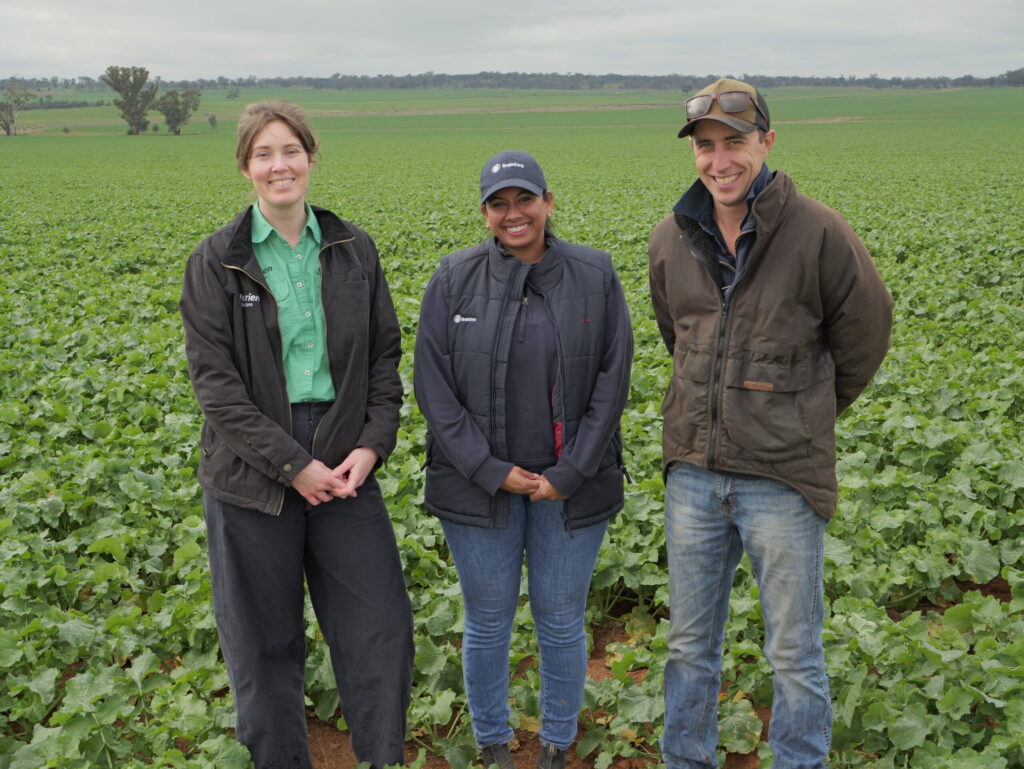
Among the grower participants are Matt Dart and Evan Lord from DB Ag, a farming business located in the southern NSW town of Ariah Park.
DB Ag has built on its existing practices such as minimum tillage, stubble retention and the use of legumes within crop rotations while using the program as a pathway to trial new approaches and technologies.
“One of the most valuable aspects of GrainCorp Next has been learning alongside growers from different regions and farming systems.”
Evan says: “The diversity of the cohort provides fresh perspectives and helps accelerate learnings. It has also provided opportunities to share experiences, data and ideas that we might not otherwise be exposed to through our local network.”
Through Farm Emissions Profiles, soil health assessments and benchmarking, GrainCorp Next has helped DB Ag gain a greater understanding of its sustainability performance and identify practical opportunities for continuous improvement.
“Through the program, we’ve been able to explore additional soil health testing, enhanced efficiency fertilisers and trial AI-powered spore detection technologies such as BioScout,” Evan continues.
“It’s given us a practical way to test new ideas while continuing to improve productivity, soil health and sustainability outcomes.”
Measuring and verifying sustainability outcomes
A key focus of GrainCorp Next is building confidence in sustainability outcomes through credible measurement, reporting and verification.
The program is supporting the development of frameworks to measure emissions, soil health and other sustainability indicators, providing greater transparency for growers, value chain partners and end users.
This includes on-farm emissions measurement, soil health assessments and participation in recognised frameworks such as the SAI Regenerating Together Framework.
GrainCorp Next is also contributing to the development of a robust Measurement, Reporting and Verification (MRV) approach designed specifically for Australian broadacre cropping systems.
“Sustainability outcomes are valuable to our customers when they can be measured, understood and trusted,” says Mick Anderson.
“Building confidence in data and verification is a critical step in helping growers, customers and industry partners better understand progress and identify future opportunities.”
Creating value across the supply chain
GrainCorp Next is exploring how sustainability outcomes delivered on farm can be connected to customer needs, emerging reporting requirements and future market opportunities across the grain value chain.
Beyond the farm gate, the program is also investigating opportunities to improve efficiency and reduce emissions across transport, storage, handling and processing activities.
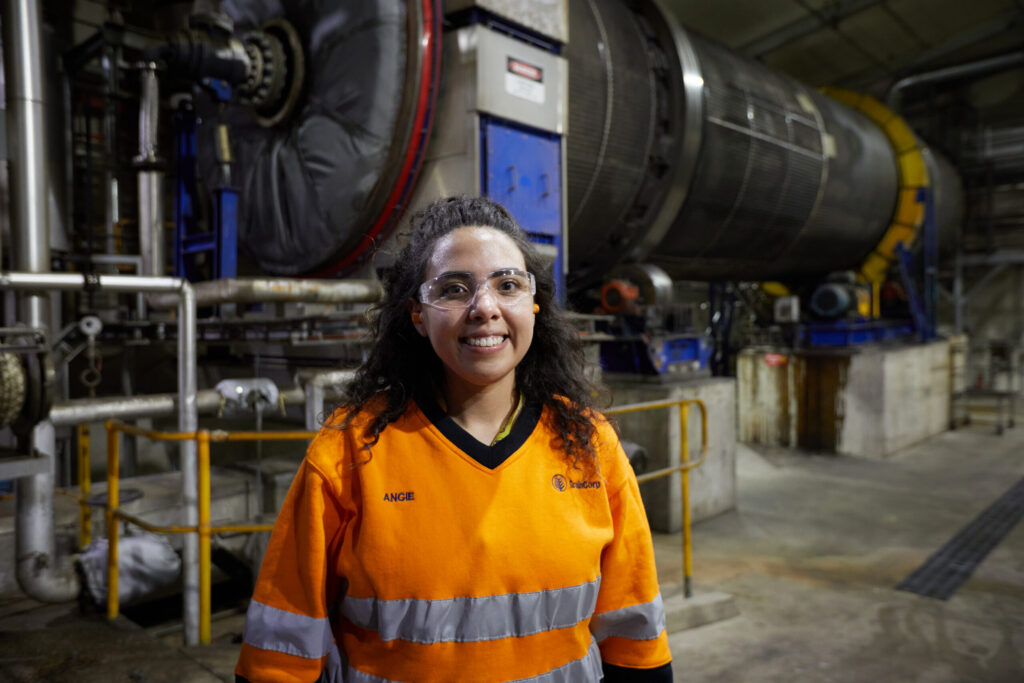
At GrainCorp’s processing sites, including Numurkah, the company continues to assess practical decarbonisation opportunities such as renewable diesel trials, electric loaders, solar battery systems and site-level efficiency improvements.
In 2025, GrainCorp achieved a greater than 2.5 per cent improvement in energy efficiency across its processing sites, contributing to a 5 per cent reduction in Scope 1 and 2 emissions per tonne of production.
By connecting grower action with customer demand, GrainCorp Next is helping build the trusted data, credentials and transparency needed to support future sustainability commitments, market requirements and commercial opportunities.
“Reducing emissions across the value chain requires collaboration from farm gate to end customer,” says Mick.
“The insights we’re gaining today will help inform practical solutions that support sustainability outcomes, strengthen the competitiveness of Australian grain and help meet the evolving expectations of customers and markets.”
To find out more about GrainCorp Next, visit the GrainCorp Next website or email [email protected].